Keynote Speakers
(Names sorted in alphabetical order)

Asteris Apostolidis
Senior Lead, Technical Innovation, Netherlands
Presentation Title: Enablement of Data-driven Aircraft Fleet Management
Enablement of Data-driven Aircraft Fleet Management
FleetLab is a transversal KLM initiative designed to bridge the domains of Engineering & Maintenance, Network, Fleet Services, and Fleet Development through data-driven collaboration and innovation. Positioned at the intersection of operations, engineering, and digital technology, FleetLab leverages the combined expertise of these functions—supported by BlueLabs’ advanced analytics and AI capabilities—to deliver holistic insights into fleet performance and lifecycle optimization.
The initiative addresses one of the most significant opportunities in aviation: reducing inefficiencies that collectively amount to hundreds of millions in avoidable costs. By integrating predictive models, real-time data streams, and historical analysis, FleetLab enables KLM to identify and act on early signals of over-maintenance, material waste, and suboptimal scheduling decisions. The outcomes translate into higher aircraft uptime, improved operational resilience, and better alignment between technical readiness and network planning.
Beyond cost efficiency, FleetLab redefines how data supports decision-making across the airline’s ecosystem, fostering a culture of evidence-based collaboration. It exemplifies KLM’s commitment to innovation through unity—where technical depth, operational experience, and digital intelligence converge to create tangible strategic advantage and unlock new value across the fleet’s full lifecycle.
Dr. Asteris Apostolidis serves as Senior Lead for Technical Innovation at KLM Royal Dutch Airlines, overseeing the implementation and scaling of advanced technologies, including Artificial Intelligence, Digital Twins, and Autonomous Systems, across multiple divisions. He has an extensive background with airlines, academic institutions, and aerospace OEMs. An expert in engineering simulation, Asteris specialises in trustworthy AI and Data Exchange Systems for safety-critical applications. He is a founding member of EASA’s Regulatory Committee for Artificial Intelligence and has served on several institutional, industrial, and academic working groups. He also contributes as an Advisory Board member for Horizon Europe and national research projects, as well as a technical expert for the European Commission. An active researcher, he is affiliated with Amsterdam University of Applied Sciences as a Senior Associate, where he previously held the position of Associate Professor of Digital MRO. Dr. Apostolidis holds a PhD in Computational Aerothermodynamics from Cranfield University.
1- Fleet Management
2- Maintenance Planning
3- Airline Network
4- Data-driven decision making
5- Sustainable aviation
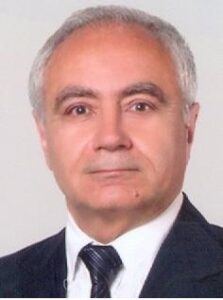
Chingiz Hajiyev
Istanbul Technical University, Faculty of Aeronautics and Astronautics, Türkiye
Presentation Title: Difference Kalman Filtering with Application to Inertial Navigation
Difference Kalman Filtering with Application to Inertial Navigation
This study proposes a new discrete Kalman filter that takes into account unknown systematic measurement errors. In this case, the filtering algorithm estimates the differences between two successive states. The differences between two successive measurements are used as measurements, as a result of which the systematic measurement errors mutually exclude each other. Corresponding expressions for estimating the state, the variance of the estimation errors, and the gain coefficient of the difference Kalman filter (DKF) are derived. A fault detection method based on the statistical properties of one-dimensional innovation sequence is presented and applied to fault detection in DKF. The proposed filter significantly improves the quality of estimation in the presence of constant or slowly changing biases in measurements. When this approach is applied to an inertial navigation system (INS), the INS can provide autonomous navigation without the use of external navigation resources.
Prof.Dr. Chingiz Hajiyev, graduated from Moscow Aviation Institute, Moscow, Russia, with honors in 1981. He received his Ph.D. and DSc (Eng) degrees in Process Control in 1987 and 1993, respectively.
From 1987 to 1994 he worked as a Scientific Worker, Senior Scientific Worker, Chief of the Information-Measurement Systems Dept. at the ASPA “Neftgazavtomat”. From 1994 to 1996 he was a Leading – Scientific Worker at the Institute of Cybernetics of the Academy of Sciences of Azerbaijan Republic. He was also a Professor in the Department of Electronically-Calculated System Design, Azerbaijan Technical University, where he had been teaching 1995-1996.
He joined to Department of Aeronautical Engineering, Istanbul Technical University, Turkey in 1996 as a Professor. From 2016 to 2023, he was also Head of the Aeronautical Engineering Department. He is the author about 600 scientific publications including 15 books, 42 book chapters and more than 400 international journal and international conference papers. More than 100 scientific papers are published in the Science Citation Index Expanded (SCIE) journals. His research interests include attitude determination and control, fault diagnosis, fault tolerant control, Kalman filtering and integrated navigation systems.
1- Navigation
2- Fault diagnosis
3- Fault tolerant control
4- Kalman filtering
5- Satellite attitude determination and control

Eva Melaviti
Embry-Riddle Aeronautical University, USA
Presentation Title: MRO Challenges & Risks for Hydrogen-Powered Aviation
MRO Challenges & Risks for Hydrogen-Powered Aviation
N/A
Dr Eva Maleviti is an Assistant Professor at Embry-Riddle Aeronautical University (ERAU). After a long-term career in the aerospace industry as academic coordinator and consultant in MROs and airlines, in 2022 she joined ERAU as the program coordinator of the MS in Aviation and Aerospace Sustainability. She has been involved in various industry projects related to aviation sustainability strategies, ESG plans, and other aviation-related initiatives and more in the field of energy management and sustainability. Dr Maleviti also works as a technical expert for aviation emission metrics and calculations in the Accreditation System of Greece for ICAO CORSIA and EU-ETS schemes. She is involved in industry training for aviation topics, such as human factors, aviation legislation, safety, quality management and auditing techniques, and other EASA-related courses. She is involved in research projects regarding the adoption of environmental management systems in aviation, energy management in aviation buildings professionals’ perspectives in aviation sustainability, airports, hydrogen certification, and standardization. She has authored over 15 journal publications, presented at more than 30 international conferences and industrial workshops. She is the author of two books: Fundamentals of Sustainable Aviation and Energy Management and Renewable Energy, and she is a Member of the Royal Aeronautical Society. She has a Ph.D. in Sustainability, Energy and Environment, an MSc in Sustainable Development and a Graduate certificate in Aviation Maintenance.
1- Hydrogen
2- Sustainable Aviation
3- Policy
4- Standardization
5- Circularity
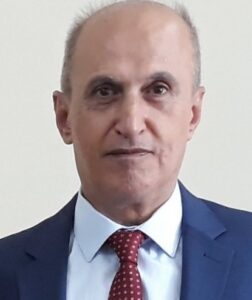
Islam Isgandarov
ISATECH - Azerbaijan Chapter
Presentation Title: Methods and means for improving the accuracy of GPS receivers
Methods and means for improving the accuracy of GPS receivers
In this work are analyzed various factors affecting GNSS positioning accuracy, as well as methods and tools for addressing these issues.
The capabilities of the most common methods and tools for improving the accuracy of satellite navigation systems are also discussed.
This paper analyzes the capabilities of approximating GPS receiver data using MS Excel. The energy parameters of the satellite-to-GPS receiver communication channel are calculated using the MatLab (MatCad) software environment. A developed regression analysis method for linear and parabolic regression is proposed. A model of a GPS receiver based on the NEO-7M kit, as well as the NEO-6M kit with and without a low-noise amplifier, is presented, as well as a schematic diagram of a low-noise amplifier based on the MGA-655T6 low-noise transistor, implemented in the Proteus environment. Analysis of data obtained by the NEO-6M GPS module and calculations using regression analysis in MS Excel showed that, after statistical processing, the accuracy of coordinate measurements can be increased to 2–5 m, allowing some navigation tasks to be solved without the use of additional tools.
It is shown that the polynomial approximation method with a second-degree polynomial with 25 dimensions can provide a reliability coefficient close to 1 (0.98).
Graduated from the Sevastopol Instrument-making Institute (Crimea, Ukraine) in 1985. In the direction from 1985 to 1995 he worked at the Institute of Photoelectronics of Azerbaijan as an engineer, applicant. Since 1995 he has been working at the NAA , in the positions of senior researcher, head of the laboratory, head of the department, since 2005 head of various departments. Currently, the head of the department “Aerospace instruments”. Engaged in scientific and pedagogical work, supervises master’s and doctoral dissertations, grant and state budget projects. Develops new educational programs, curriculum, work programs for special disciplines. Islam is engaged in research in the electronic and automated systems, also aerospace engineering. His current project is “Modern Problems of Aviation Avionics Systems”. His main research interests are in the development of models, sensors and devices for non-contact monitoring of electrical parameters, navigation system parameters, weight and center of gravity measurement systems. He is also engaged in research in the direction of studying and developing nanosensors for various fields. Also works on issues of processing radar and radio navigation systems signals using modern methods and means, in particular filters and MEMS modules. He has about 200 scientific papers, including more than 70 journal articles.
1 – Non-contact measurements
2 – Modern sensors
3 – Improvement of avionics
4 – Aerospace devices
5 – Information and measuring systems based on MEMS
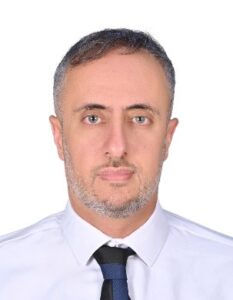
Munir Ali Elfarra
Abu Dhabi Polytechnic, UAE
Presentation Title: Future trends in Aircraft Maintenance Training Organization (PART 147)
Future trends in Aircraft Maintenance Training Organization (PART 147)
The aviation industry is undergoing a transformative shift driven by emerging technologies and sustainability imperatives. Future trends in Part 147 Aircraft Maintenance Training Organizations (MTOs) will focus on integrating Artificial Intelligence (AI), electric and hybrid propulsion systems, and urban air mobility (air taxis) into training curricula. AI will revolutionize maintenance training through predictive analytics, virtual reality simulations, and adaptive learning platforms, enabling personalized skill development and real-time troubleshooting. The rise of electric and hybrid propulsion demands new competencies in battery systems, thermal management, and high-voltage safety protocols, requiring MTOs to redesign modules beyond traditional gas turbine engines. Additionally, the anticipated proliferation of air taxis and eVTOL aircraft introduces unique maintenance challenges, such as distributed propulsion and advanced avionics, necessitating specialized training pathways. These innovations will reshape regulatory frameworks, competency standards, and assessment methodologies, positioning AMTOs as critical enablers of a sustainable and technologically advanced aviation ecosystem.
Dr. Elfarra has completed his PhD from Middle East Technical University, Turkiye. He previously he was the head of the Flight Training department and the head of the training at the University of Turkish Aeronautical Association and its Flight Training Organization. After that, he worked associate professor at Ankara Yildirim Beyazit University in Turkiye. Currently he is working as an associate professor at the department of Aircraft Maintenance Technology at Abu Dhabi Polytechnic, Al Ain Campus.
During his academic work, he also served as a consultant for many national and international industrial engineering projects.
Dr. Elfarra has more than 15 years of experience in aerospace engineering, civil aviation and renewable energy. His main research areas are aerodynamics, turbomachinery, CFD and wind energy assessment.
He supervised around 20 master of science and PhD theses. He has around 45 peer reviewed publications. He has also been active in academic accreditation, curriculum development and academic program improvement.
1- Aerodynamics
2- CFD
3- Propulsion Systems
4- Renewable Energy
5- High order schemes

Nguyen Dinh-Dung
Faculty of Aerospace Engineering, Le Quy Don Technical University, Hanoi, Vietnam
Presentation Title: Solar-Based Navigation Support for UAVs in GPS-Denied and Signal-Jammed Environments Using an Arduino-Controlled Sunlight Tracker
Solar-Based Navigation Support for UAVs in GPS-Denied and Signal-Jammed Environments Using an Arduino-Controlled Sunlight Tracker
The effective operation of military unmanned aerial vehicles (UAVs) is critically reliant on continuous access to control and positioning signals. However, these signals are vulnerable to detection, jamming, and spoofing in contested or hostile environments, significantly compromising UAV mission success. While vision-based navigation systems offer a partial solution in object-rich environments, they are ineffective in homogeneous or featureless terrains, such as deserts, oceans, or snowfields, where visual references are sparse or non-existent.
To address this limitation, this study proposes a novel sunlight-tracking navigation aid that enhances UAV autonomy in signal-denied zones. The system is built around an Arduino-based solar tracker that detects and follows the sun’s trajectory in real time. By leveraging solar orientation as a natural and persistent reference, the tracker provides directional support that can help UAVs reorient and navigate toward areas with restored communication or GPS coverage.
The proposed solution offers a lightweight, low-power, and cost-effective alternative to inertial and vision-based systems, particularly for tactical or emergency navigation scenarios. Experimental results demonstrate the feasibility of the solar-tracking mechanism for dynamically adjusting UAV orientation in response to changes in solar azimuth and elevation. The findings suggest potential applications for supporting UAV recovery, autonomous rerouting, and enhanced resilience in electronic warfare environments.
Dinh-Dung Nguyen is a professor at the Faculty of Aerospace Engineering, Le Quy Don Technical University, Hanoi, Vietnam. He received his Ph.D. in Transportation Engineering and Vehicle Engineering at the Budapest University of Technology and Economics, Hungary, in 2021. He has been involved in several national and international studies and projects related to sustainable aviation, aviation engineering, aerial vehicles, system design, and control device integration of aircraft, concentrating on assessing security vulnerabilities and countermeasures. He also served on an organizing committee of international conferences. He is a reviewer for international scientific journals. His research interests are drone management, unmanned aerial vehicles, system design, control device integration of aircraft, transportation system in smart city, urban planning and forecasting.
1- Unmanned Aerial Vehicles (UAVs)
2- Solar Tracking System
3- GPS-Denied Navigation
4- Autonomous Navigation
5- Directional Control
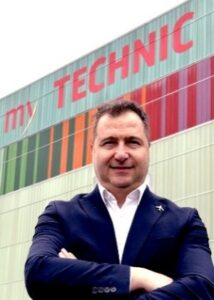
Okan Özkan
myTECHNIC MRO Technical Services A.S., Türkiye
Presentation Title: AI, Robots and Digital Twins: Building the Next-Generation Aircraft MRO Ecosystem
AI, Robots and Digital Twins: Building the Next-Generation Aircraft MRO Ecosystem
The aircraft maintenance, repair and overhaul (MRO) sector is under simultaneous pressure from tighter turnaround times, workforce constraints, increasing regulatory complexity and ambitious sustainability targets. This keynote explores how three converging technologies—artificial intelligence (AI), robotics and digital twins—can together enable a next-generation MRO ecosystem that is safer, smarter and more sustainable.
First, we examine AI as the “brain” of the system, focusing on use cases such as predictive and prescriptive maintenance, intelligent technical documentation search and AI-supported quality assurance. Second, we discuss robots as the “hands and feet” in the hangar, including autonomous logistics robots and inspection platforms that offload repetitive and ergonomically challenging tasks from technicians. Third, we present digital twins of aircraft, hangars and processes as the “nervous system and memory” that integrates data, simulates operations and orchestrates resources in real time.
Practical implementation steps, from data standardization to targeted pilots and ecosystem-level integration, are outlined. Throughout, the human remains at the center, with technology designed to augment—not replace—technical expertise.
Okan ÖZKAN is R&D and Business Development Director, at myTECHNIC MRO Technical Services and ISO:27001 Lead Auditor, with over 20 years’ experience in software development, project management, and innovation. He leads ICT and R&D, overseeing software projects, vendor management, and cost-benefit analysis, and implemented in-house maintenance management software and TUBITAK-TEYDEB projects. He certified myTECHNIC as an R&D Center in 2018. Previously, he was IT Manager at Group SAGUN, Network & Software Manager at MNG Kargo A.Ş., and Software Engineer at KALEDATA Group. He also worked at Eastern Mediterranean University on campus security systems and as a microprocessors assistant. He holds a master’s in computer engineering (Haliç University), a BS in Electrical & Electronics Engineering (Eastern Mediterranean University), a BA in business administration, and a pre-bachelor’s in justice (Anadolu University). Fluent in English, he has expertise in programming, ERPs, and databases. He is President of ARGEMIP, a DEIK member, and serves on advisory boards at Halic University, GTU and Eskisehir Technical Universities. He is also a member of EMO and TBD. His interests include scuba diving, sailing, golf, woodworking, and model making.
1- Robotic Systems
2- Artificial Intelligence (AI)
3- Innovation Management
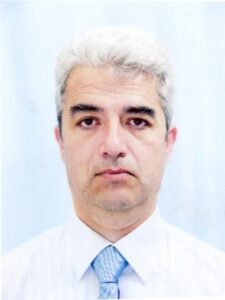
Parviz Abdullayev
National Aviation Academy , Department of Flight Vehicles and Aviation Engines, Head of Department, Azerbaijan
Presentation Title: Refined Chemical Equilibrium Modeling for Cryogenic Combustion and Phase Transitions
Refined Chemical Equilibrium Modeling for Cryogenic Combustion and Phase Transitions
Chemical equilibrium calculations are a cornerstone of modern propulsion system design and analysis, providing critical predictions of thermodynamic properties, species compositions, and phase behavior in reacting flows. Accurate modeling of equilibrium compositions is particularly important in cryogenic combustion systems and low mixture ratio regimes, where condensed-phase species, polymorphic transitions, and triple-point phenomena significantly influence system performance. Computational tools such as NASA CEA and RPA have become standard references in this domain. However, their implementations exhibit notable limitations when applied to these challenging conditions. In particular, inconsistencies have been observed between the theoretical formulations reported in NASA documentation and their algorithmic realization, leading to discontinuities in temperature-mixture ratio profiles and inaccuracies in the evaluation of thermodynamic properties. To address these deficiencies, this work reconstructs the NASA CEA methodology from first principles, retaining the original Gibbs free energy minimization framework based on the method of chemical potentials. Several algorithmic refinements and corrective plugins have been incorporated to enhance numerical stability, ensure consistent treatment of condensed phases, and resolve issues related to triple-point and polymorphic solid transitions. The revised solver provides continuous and physically consistent predictions of temperature, enthalpy, and species compositions across multiphase domains. The effectiveness of the proposed approach is demonstrated using representative cryogenic combustion systems, including liquid methane and liquid oxygen and liquid hydrogen and liquid oxygen mixtures. The refined model accurately reproduces expected triple-point behavior and smooth polymorphic phase transitions, highlighting its potential for high-fidelity combustion simulations and integration with CFD solvers for advanced propulsion applications. The reconstructed chemical equilibrium framework demonstrates that algorithmic refinements significantly improve the predictive accuracy of thermodynamic properties in cryogenic and low mixture ratio combustion systems. By addressing deficiencies in the treatment of condensed species, polymorphic solid transitions, and triple-point conditions, the refined solver eliminates discontinuities in temperature-mixture ratio profiles and produces physically consistent enthalpy and composition predictions. Applications to liquid methane and liquid oxygen and liquid hydrogen and liquid oxygen combustion illustrate the practical implications of these improvements.
In CH4-O2 and H2-O2 mixtures, the solver reproduces the expected triple-point temperature and smooth phase behavior, which is critical for accurate modeling of low-O/F propellant regimes. Moreover, the refined model ensures continuity in both thermodynamic and compositional outputs, overcoming limitations observed in NASA CEA and RPA. These results highlight that even minor deviations in conventional solvers can propagate into significant errors in related mixtures, emphasizing the importance of rigorous algorithmic treatment for condensed-phase phenomena. The proposed methodology establishes a robust, physically consistent foundation for chemical equilibrium calculations and facilitates integration with CFD solvers, enabling high-fidelity simulations of advanced propulsion systems. This approach provides both theoretical rigor and practical utility, supporting improved design, analysis, and optimization of cryogenic engines. The refined chemical equilibrium solver corrects deficiencies in NASA CEA and RPA, accurately modeling condensed species, triple points, and polymorphic transitions. Validation with CH4-O2 and H2-O2 demonstrates smooth, physically consistent predictions, enabling high-fidelity cryogenic propulsion simulations.
Parviz Abdullayev, PhD., Professor, In 1990 he graduated Leningrad Mechanical Institute (Russia) in Flight Vehicles Engines field. Since 2003 he is Head of the Flight Vehicles and Jet Engines Department of the National Aviation Academy (Azerbaijan). He defended the Ph.D. thesis in 2001 and the D.Sc. thesis in 2014. Author of 104 scientific papers, 3 patents and 5 books. His research interest: mathematical modeling of aircraft and rocket engines, thermo-gas-dynamics, diagnostics with soft computing and machine learning.
1- aircraft engines
2- rocket engines
3-health monitoring and diagnostics
4- soft computing

Preetwant Singh
SARES- Singapore Chapter President, Singapore
Presentation Title: Title
Title
Abstract
Preetwant Singh is a transformative leader in aviation, renowned for his pioneering spirit and vision in shaping the industry’s future. With over three decades of experience piloting more than 20 aircraft types, he is the founder of Pegasus-AC/PAC Aviation, a leading provider of innovative training programs. His work has impacted Southeast Asia, where he has educated thousands of aspiring aviators—including over 6,500 children—ranging from enthusiasts to commercial and military professionals.
A recognized authority in sustainable aviation and UAV regulations, Singh actively contributes to advancing the global Low-Level Economy. He holds leadership roles such as VP of World UAVF Singapore Chapter, President of ISATEC
1- Aviation Education
2- Low Altitude Economy
3- Computer Based Training/Simulation with Telemetry
4- Esports
5- Geo spatial Integration
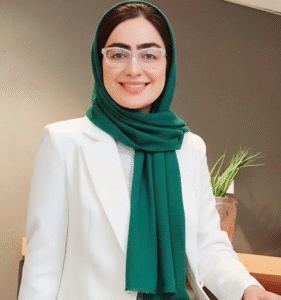
Samira Keivanpour
Polytechnique Montreal , Canada
Presentation Title: Total Recall: AI-Driven Circular MRO
Total Recall: AI-Driven Circular MRO
In the current linear economy, aerospace parts suffer from “amnesia” once they hit the scrap bin; we lose their history, their alloy composition, and their value. This keynote introduces Total Recall for MRO: a system where Artificial Intelligence and Digital Product Passports ensure that every component remembers its origin.
It will demonstrate how we can bridge the gap between the factory floor and the maintenance hangar. By using AI to “see” the value in mixed manufacturing scrap and MRO waste , we create a feedback loop that turns forgotten waste into intelligent assets. Join us to explore how “Intelligent MRO” prevents downcycling and secures the future supply chain.
Samira Keivanpour is an Associate Professor at Polytechnique Montréal and the Head of the Poly Circle X.0 Laboratory. She leads research at the intersection of sustainability and digital intelligence. Her expertise focuses on the application of Industry 4.0 to optimize circular supply chains and logistics, specifically addressing the operational challenges of the aerospace industry.
1- Sustainability
2- Circular Economy
3- Ecodesign
4- Sustainable Aerospace
5- Industry 4.0-
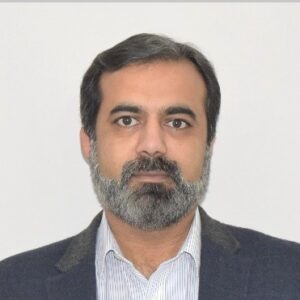
Zeeshan Rana
Prince Mohammad Bin Fahd University, Al-Khobar, Saudi Arabia
Presentation Title: Title
Abstract
Dr Zeeshan Rana has background in Mechanical and Aerospace Engineering. He obtained his PhD in Computational Methods focusing on high fidelity MUSCL schemes for shock capturing methods from Cranfield University. Dr Rana is currently working at the Prince Mohammad Bin Fahd University (KSA). Previously he had a long and established career spanning over 14 years at the Cranfield University (UK) where he contributed extensively to academia and research. He had been the Director of postgraduate program at Cranfield University (UK) for several years. Dr Rana’s focus in research is in renewable/green energy, sustainable aviation, heat transfer, fluid/aerodynamics and use of Artificial Intelligence especially deep learning in aviation sector to improve the processes.
1- Computational Methods
2- Computer Vision
3- Sustainable Aviation
4- Renewable/Green Energy
5- Artificial Intelligence/Deep Learning

Name Surname
Istanbul Technical University, Faculty of Aeronautics and Astronautics, Türkiye
Presentation Title: Title
Title
Content
Content
1- Navigation
2- Fault diagnosis
3- Fault tolerant control
4- Kalman filtering
5- Satellite attitude determination and control